Your Perception of Reality & Self Is a Hallucination | Anil Seth
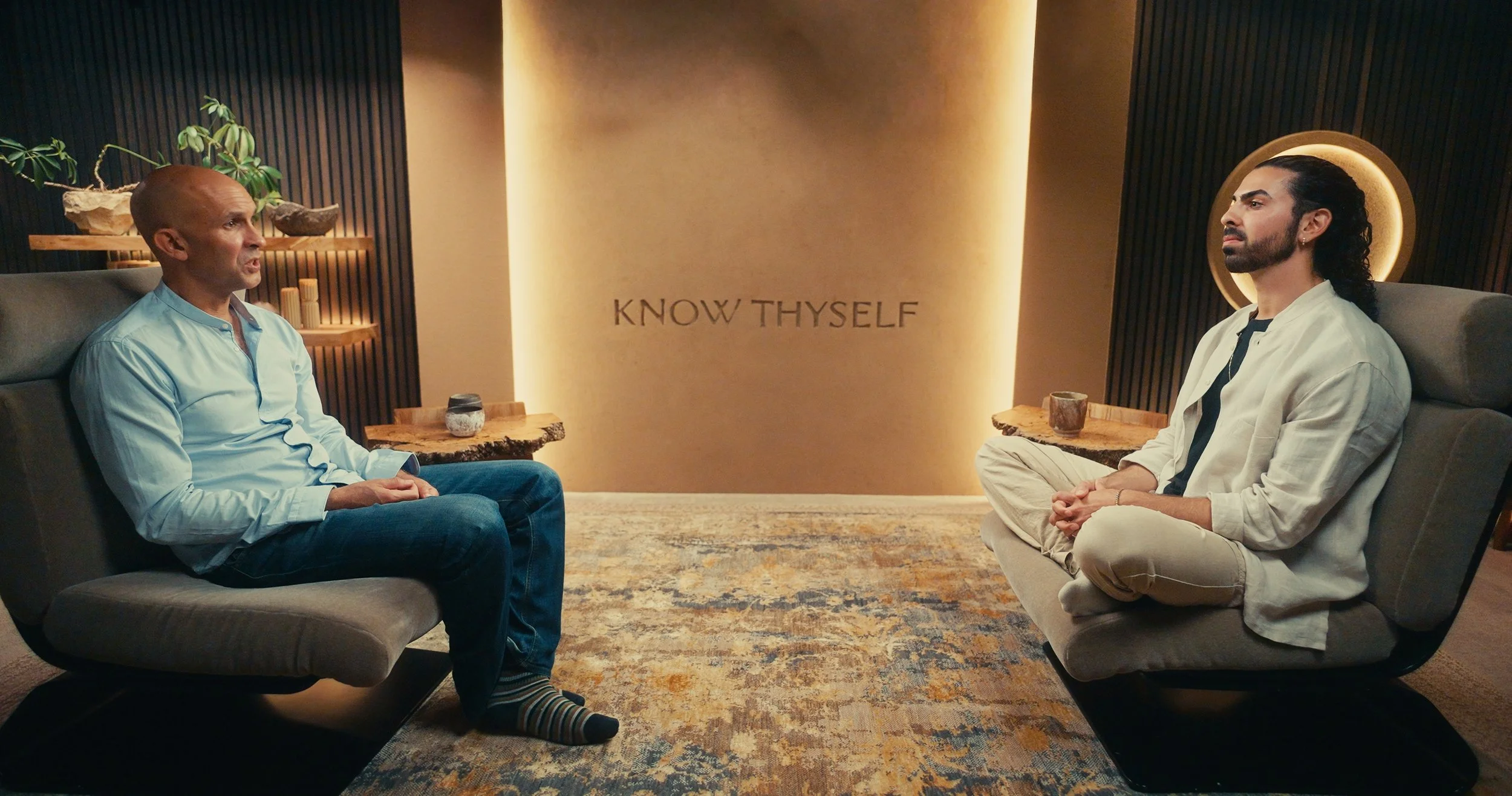
Anil Seth is a professor of cognitive and computational neuroscience at the University of Sussex and one of the world's leading researchers on consciousness. His central claim is both unsettling and liberating: we do not passively receive reality, we actively generate it. The world that appears when you open your eyes is not a transparent window onto what is actually out there. It is the brain's best guess, a controlled hallucination, built from the inside out.
In this conversation, we go deep into the mechanisms behind that claim, from how the brain functions as a prediction machine to what the self actually is when you examine it closely. We also get into the hard problem of consciousness, what it might mean for AI to seem conscious without being conscious, how psychedelics reshape perceptual habits, and why Anil believes the simplest act of opening your eyes and having a world appear is genuinely miraculous. This is one of the most intellectually challenging and quietly moving conversations we have had on the show.
KEY TAKEAWAYS
Perception Is a Controlled Hallucination
Your brain is not reading out the world like a camera. It is making constant predictions about what is out there and updating them with sensory signals. What you perceive is much more a product of those internal predictions than of the raw sensory data coming in. In that sense, all perception is a form of hallucination, just one that happens to be grounded in reality.
The Self Is Also a Prediction
Just as the brain generates a model of the external world, it generates a model of the self. The feeling of being a continuous, stable "I" is another best guess, not a fixed essence waiting to be discovered. This is both humbling and freeing, because a constructed self can be examined and updated in ways a fixed one cannot.
Seeming Conscious Is Not Being Conscious
As AI systems grow more sophisticated, they will increasingly appear to have inner lives. Anil draws a sharp line between intelligence and consciousness, arguing that current AI lacks the biological, embodied, self-regulating properties that we believe underlie genuine experience. Confusing performance for presence is not just a philosophical error. It shapes regulation, design, and how we treat these systems.
JOURNAL PROMPTS
PROMPT 01
If your perception of reality is the brain's best guess shaped by prior experience, where in your life might your predictions be overriding what is actually in front of you?
PROMPT 02
The self you experience as continuous and stable is, by Anil's account, constructed moment to moment. Does that feel threatening or freeing to you, and what does your reaction tell you?
PROMPT 03
When did you last pause to genuinely notice the miracle of being conscious at all, not as an idea, but as a lived moment of recognition?